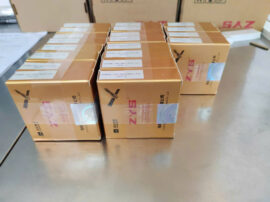


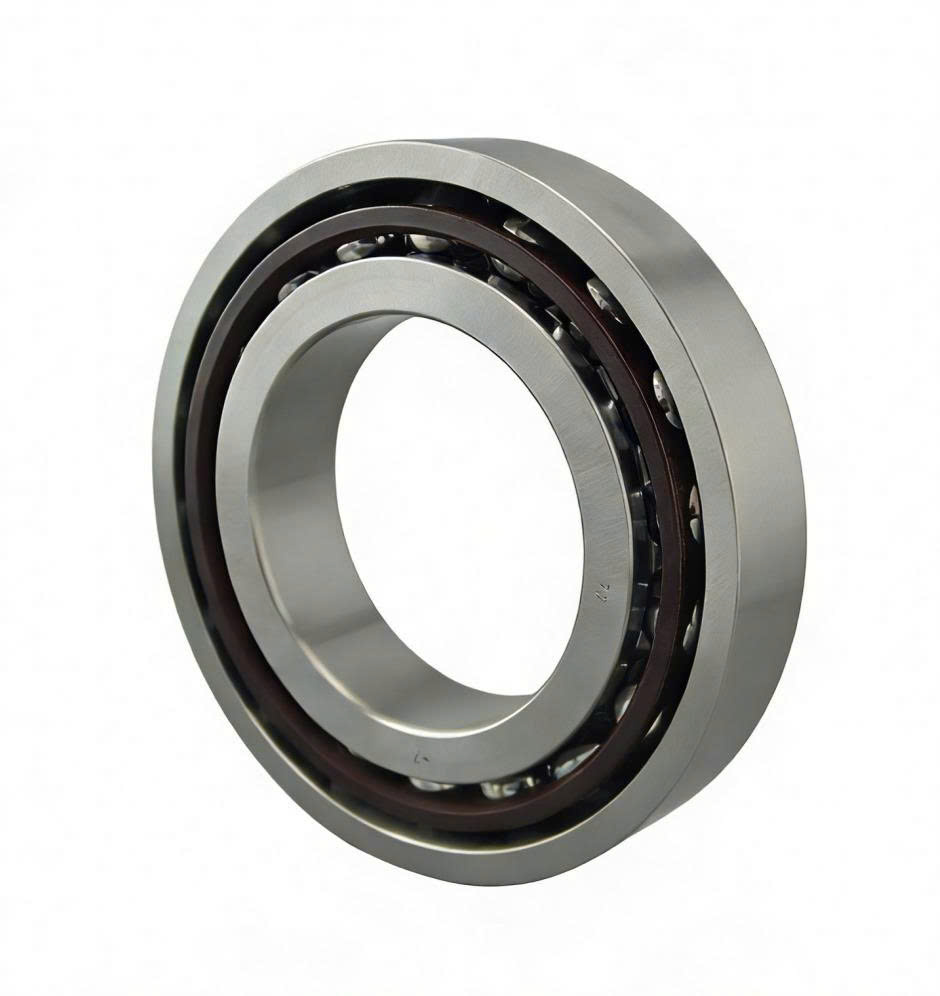
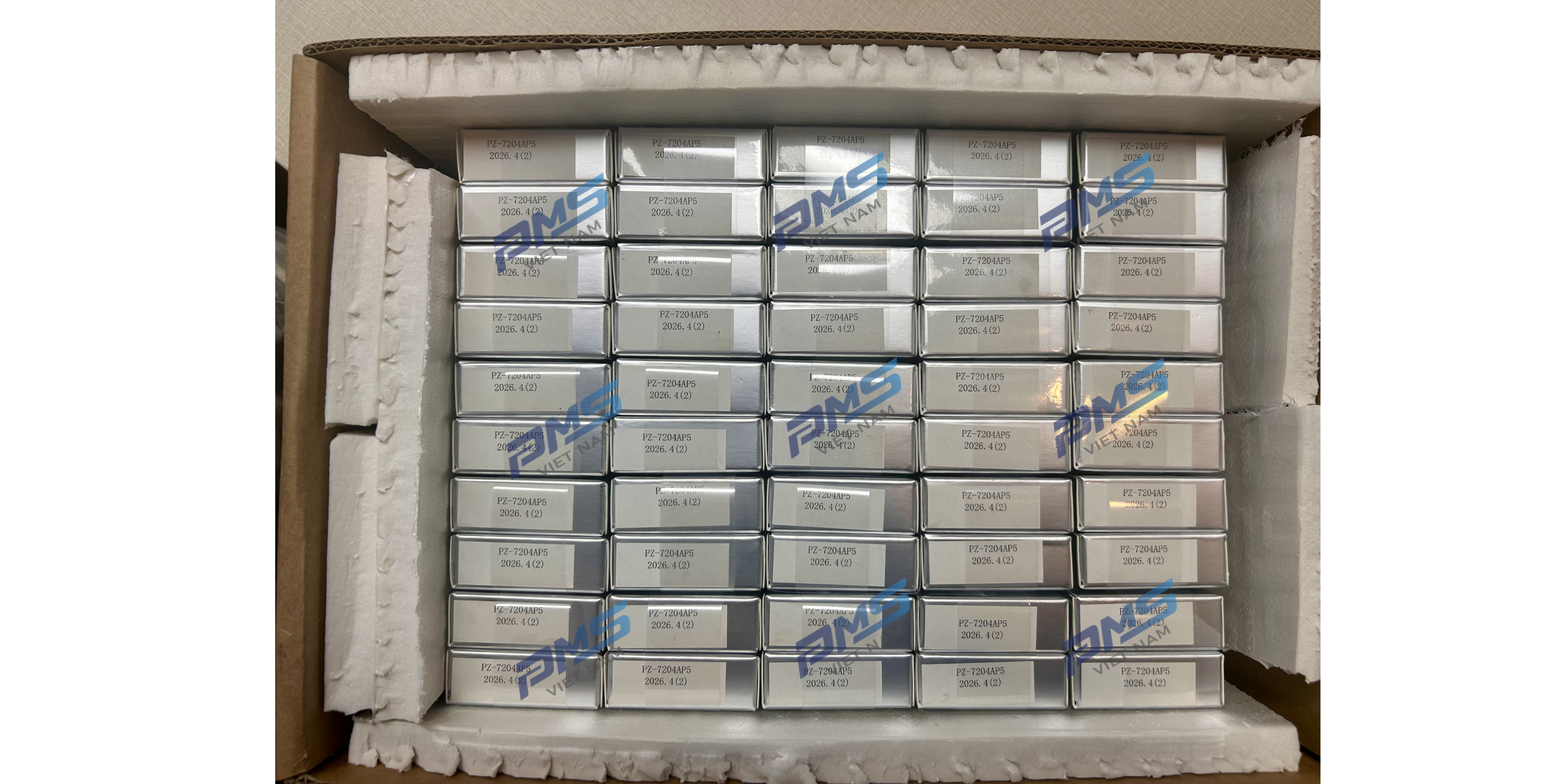
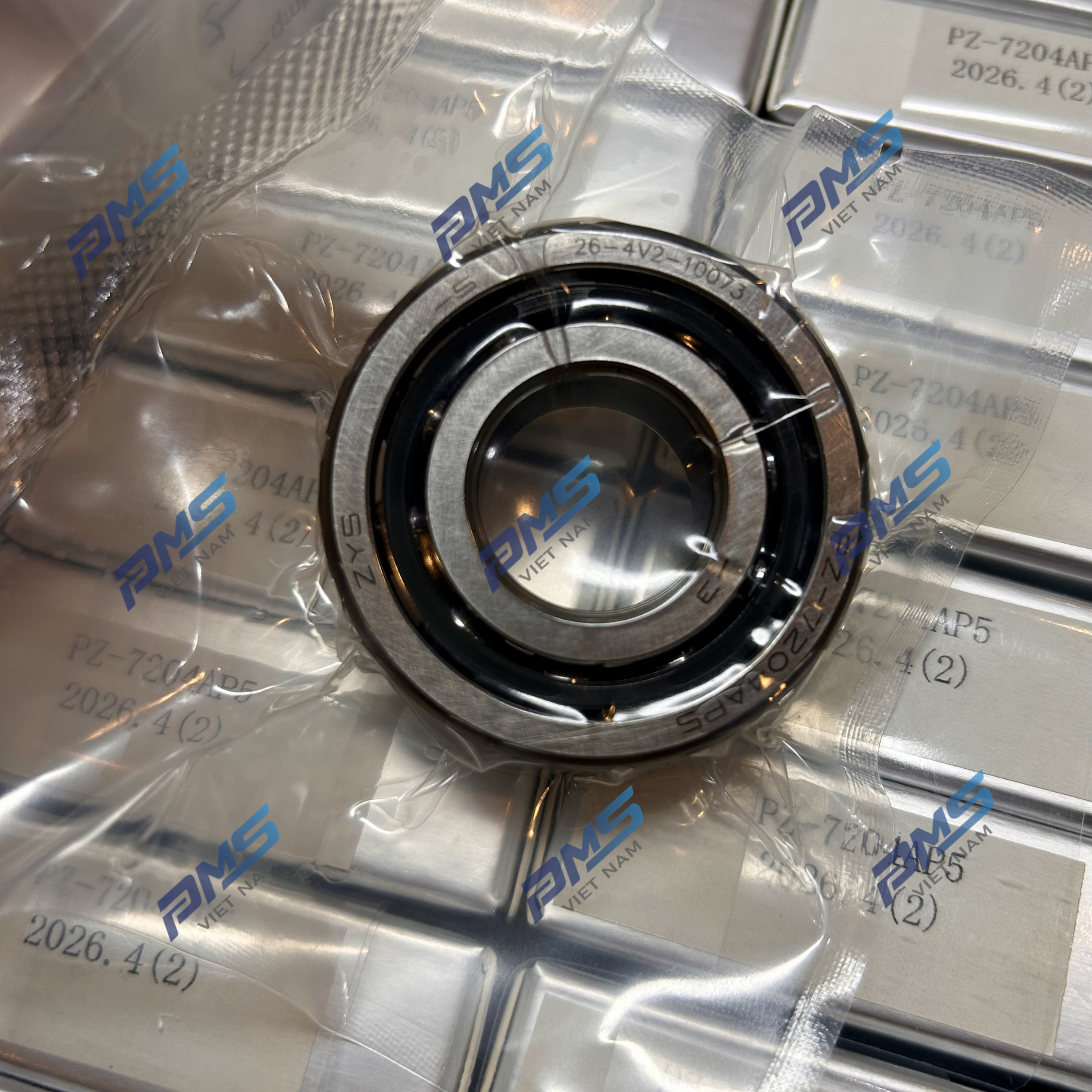
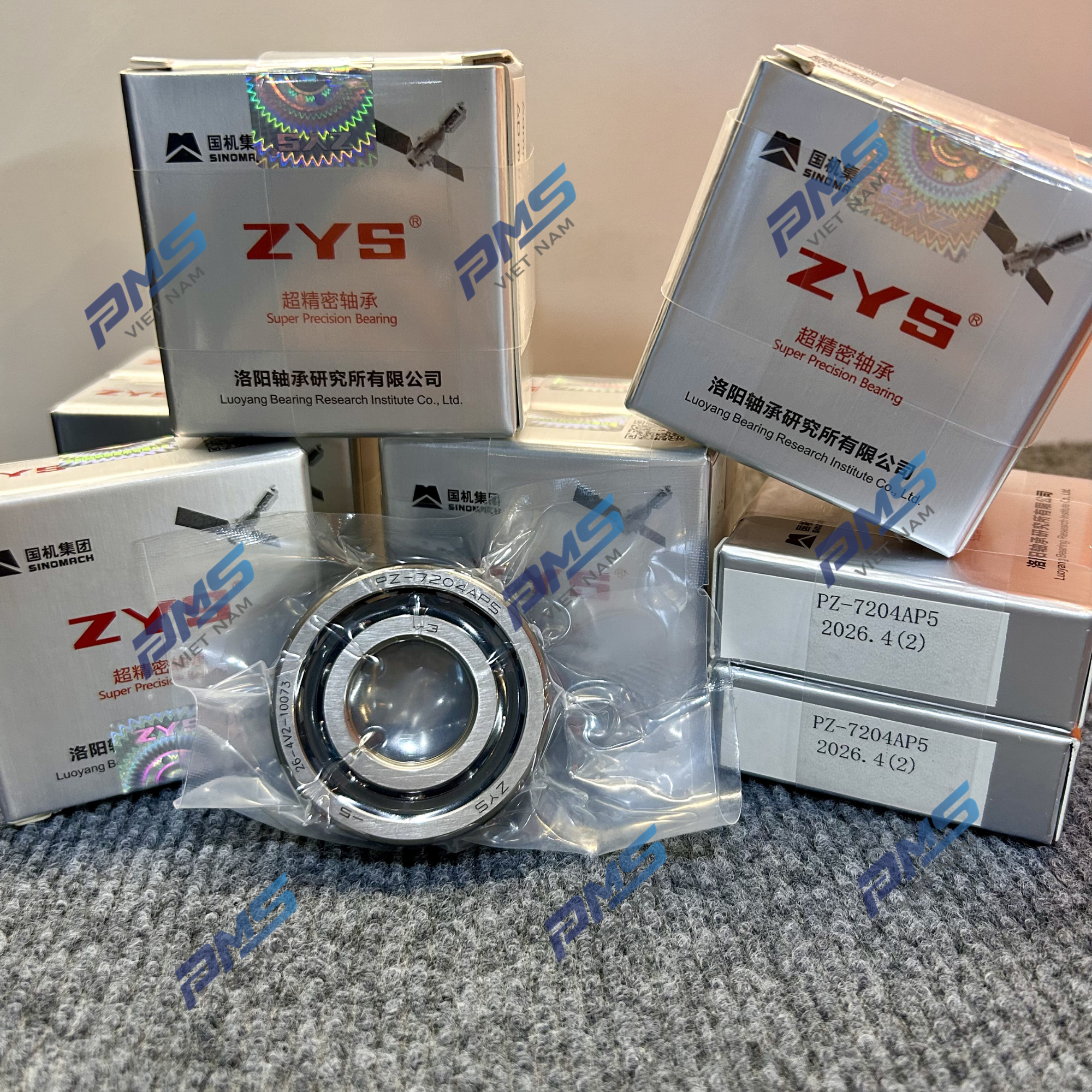
Angular contact ball bearings are nonseparable bearings with a defined contact angle in the radial direction relative to the straight line that runs through the point where each ball makes contact with the inner and outer rings.
In addition to radial loads, angular contact ball bearings can accommodate single direction axial loads. Since an axial load is generated from a radial force, these bearings are generally used in pairs.
Typically ideal for machine tools, feed screw mechanisms, ball screw support units, etc.
Angular contact ball bearings are not installed "in a fixed position," but rather in locations requiring combined load bearing (axial + radial) and high rigidity.
Below are typical installation locations in mechanical engineering – particularly relevant to your system (servo + worm/linear motion):
* Spindle
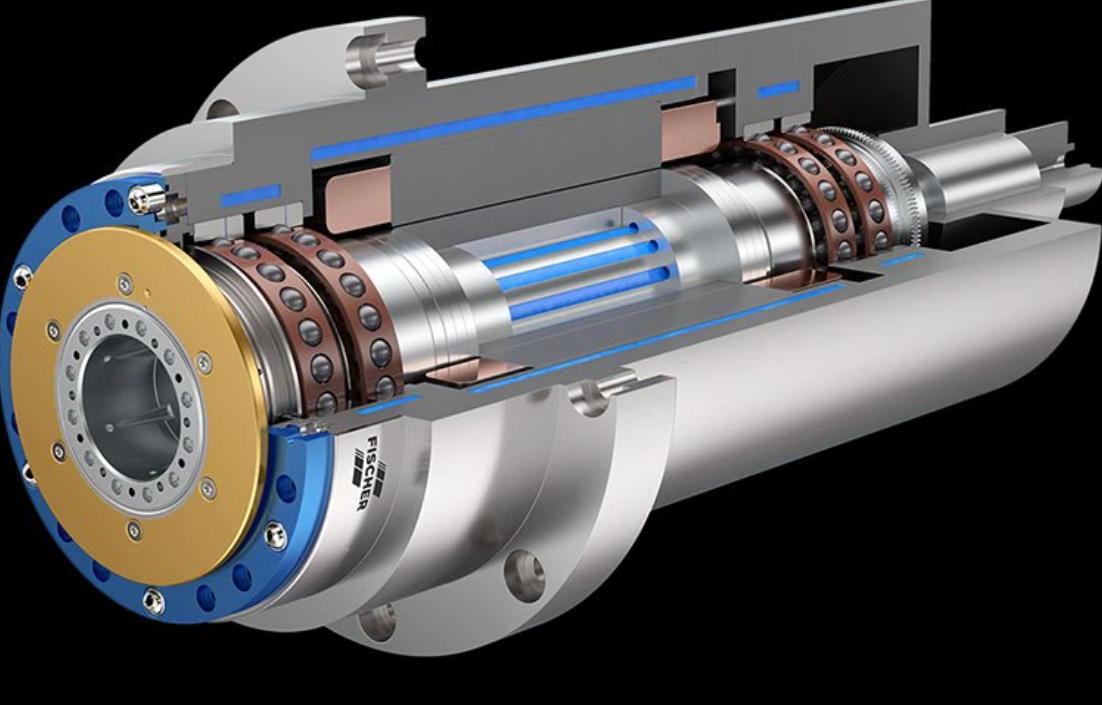
Location:
Right at the main spindle (tool tip)
Reason:
Requires cutting force → large axial load + overturning moment
Requires extremely high rigidity and rotational accuracy
Common configurations:
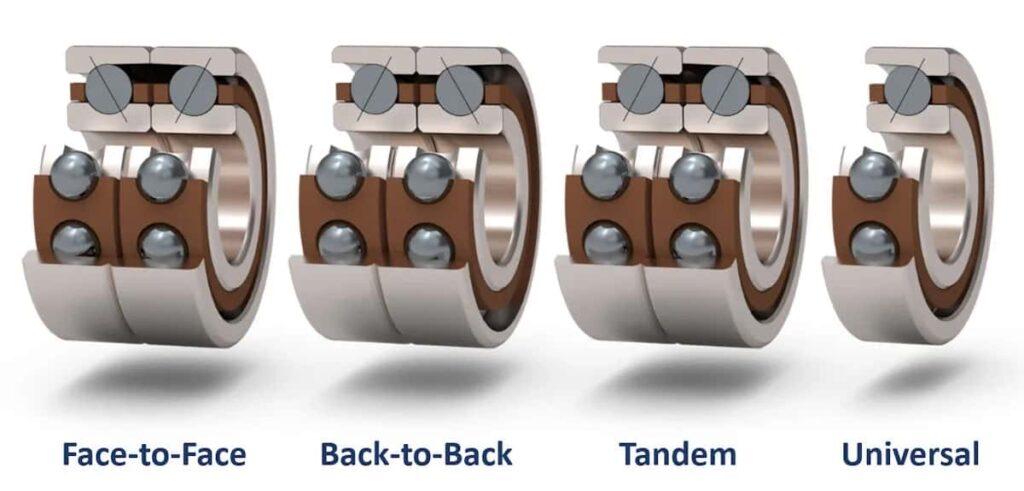
Back-to-back (DB) + preload
* Ball screw support (FIXED SIDE)
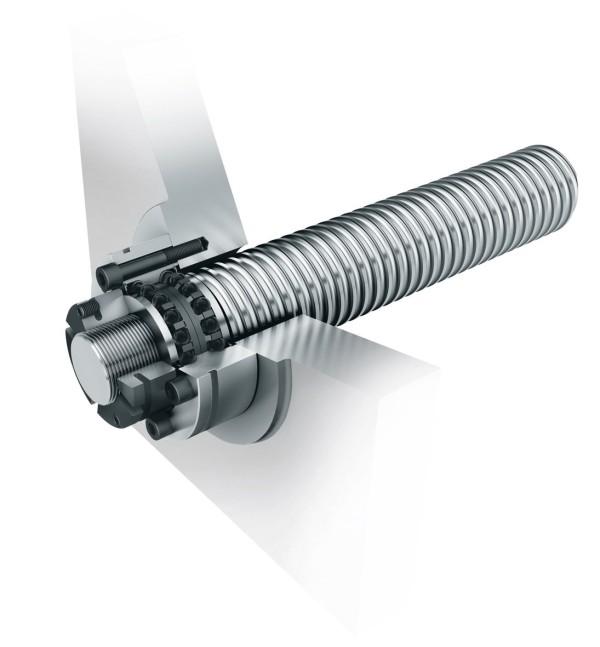
Position:
Fixed side of the screw shaft (BK block)
Reason:
Resists axial force during servo pull/push
Precise shaft positioning
Standard configuration:
2 angular contact ball bearings (DB)
Preloaded to eliminate play
* High-speed gearbox/motor
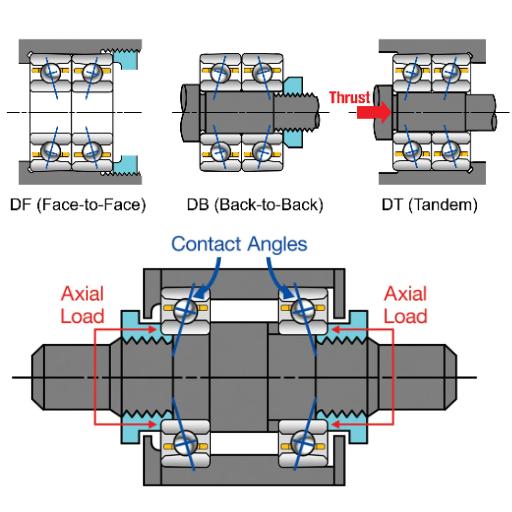
Location:
Motor shaft or gearbox shaft
Reason:
Axial force generated by helical gears/dynamic load
Requires high-speed, stable rotation
*Mechanisms requiring high precision (robots, linear stages)
Location:
Main drive axes in the precision positioning system
Reason:
Rebound control needs to be almost zero
Ensure position repeatability